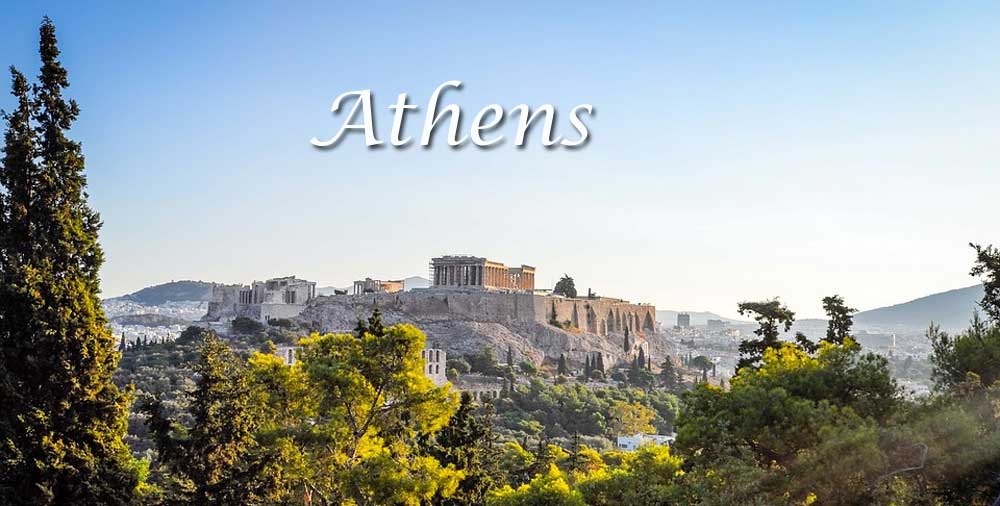
Plaka the most beautiful neighbourhood of Athens
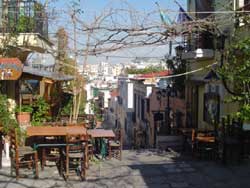 The area of Plaka is one of the most attractive districts of Athens. Under the slopes of the Acropolis, Plaka attracts all the visitors of Athens with its neoclassical mansions and houses with roofs from red tiles, its small winding roads with their steps, balconies with bougainvilleas ,geraniums and jasmines.
Plaka is called many times in the Greek literature as the neighbourhood of the Gods. The reason is that over Plaka dominates the sacred rock of the Acropolis “the sacred rock of the gods”.
Sometimes being romantic on a sunny day you feel that the Greek goddess Athena looks down to Plaka with a smile in her divine face as the modern Athenians enjoy the sunshine in the street cafes at Adrianou street overlooking Thission the Ancient Agora and the rock of Arios Pagos.
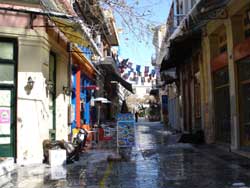 Plaka has its special place in the memories of the older generation of Athens. It use to be the area of the working class and many Greek films of the early 50’s and 60’s has been filmed there when the houses where not renovated as they are today and most of the winding roads where just earth. One of the most famous Greek film “Stella” with Melina Mercouri and Georgios Fountas was filmed there at the house opposite the bath of the winds witch today hosts a branch of an American university.
Plaka was the famous place of the typical Greek tavern where the old Athenians went and drank Retsina from Mesogeia and Markopoulo the places that still today the best retsina is coming from. In every small tavern was a quitter and always someone could play the famous wine songs of Plaka the so called “Kantades” that derives from the Italian “Cando” song.
Plaka was the most important place to be during the Greek Carnival, thousands of Athenians in masquerade used to walk up and down the streets of Plaka throwing serpentines and confetti. This tradition still exists today but without the enthusiasm of the old days.
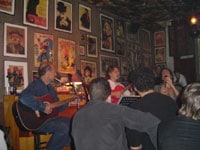 In the 60’s Plaka became the birth place of the Greek new wave music. In small live music clubs the so called “boites” many Greek composers and singers where first performed that new style of Greek music inspired from the musical stream of the 60’s in France and Italy
.
Famous Greek artists made their debut in boites like the famous Esperides of Giannis Argiris the Apanemia of George Zographos and later in Zygos of Gianni Hatzis. Famous also where many restaurants in Plaka , that they still exists, like the Mostrou, the Perivoli ton Theon (Garden of Gods), Geros tou Moria and many others.
During the 70’s Plaka became a noisy place, bars, discos, clubs had destroyed the old peaceful neighbourhood of the gods. It took years after the dictatorship until under the ministry of Melina Merkouri Plaka was renovated pedestrianized and all the nightlife havoc moved to the area of Psiri and Thissio.
What to see
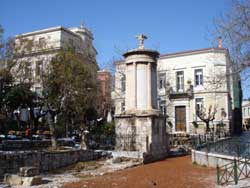 Today Plaka has gain back its old idyllic face. Becomes busy in sunny weekends and of course during the summer when tourist arriving there to explore its attractions, and Plaka has a lot of things to see.
Museums like the children’s museum in Kydathineon street and the Kanellopoulos museum just under the north slope of acropolis in Theorias street and the museum of Greek popular instruments near by. Monuments like the Lysicrates monument a monument that was build from the rich Athenian Lysicrates in 334 BC after he won the prize of the best performance that he had sponsored in the Dionysus theatre.
Archaeological areas like the Greek and the Roman agora, the Hadrian’s Library and the bath of the winds and other Roman monuments build mostly by the Roman emperor Hadrian, the Atallos Stoa that hosts a great collection of several artefacts that have been founded in the Area of the ancient Agora. Under the north east slope of Acropolis located the first university of Athens the Kapodistrian university named after the first governor of Greece Ioannis Kapodistrias on the extension of Tholou street. It was build in 1837 right after the Greek independence.
If you walk up the steps from the south slope of Acropolis you will find Anafiotica, an amazing place with small whitewashed houses all build with Cyclades island architecture from the builders that arrived here from Anafi to build the Palace of King Otto in the 19th century. Walking through the small winding streets you feel that you are rather in a Greek island of the Cyclades like Mykonos with its white houses or Paros another wonderful island of the Aegean, instead of being in the centre of the busy Greek capital.
Shopping
As a main tourist attraction of Athens Plaka has a lot of shops mainly with tourist items like Greek art shops, Furs and jewellery shops. The main shopping streets are Adrianou, Pandrosou and Hephaestou.
Most of the restaurants located around of the square of Philomouson in Kythathineon street like the Plaka restaurants Byzantino, Plaka and Acropolis on the streets around the Bathe of the winds and on the steps of Mnisikleous street.
Enjoy our Gallery with photos of Plaka in the section of our Athens pictures with its many classical buildings, squares, cafes and shops where you can get a souvenir to remind you your travel memoirs from your travel to Greece.